Mar 6, 2026
IETA and São Paulo host workshop on preparing for Brazil’s emissions trading system
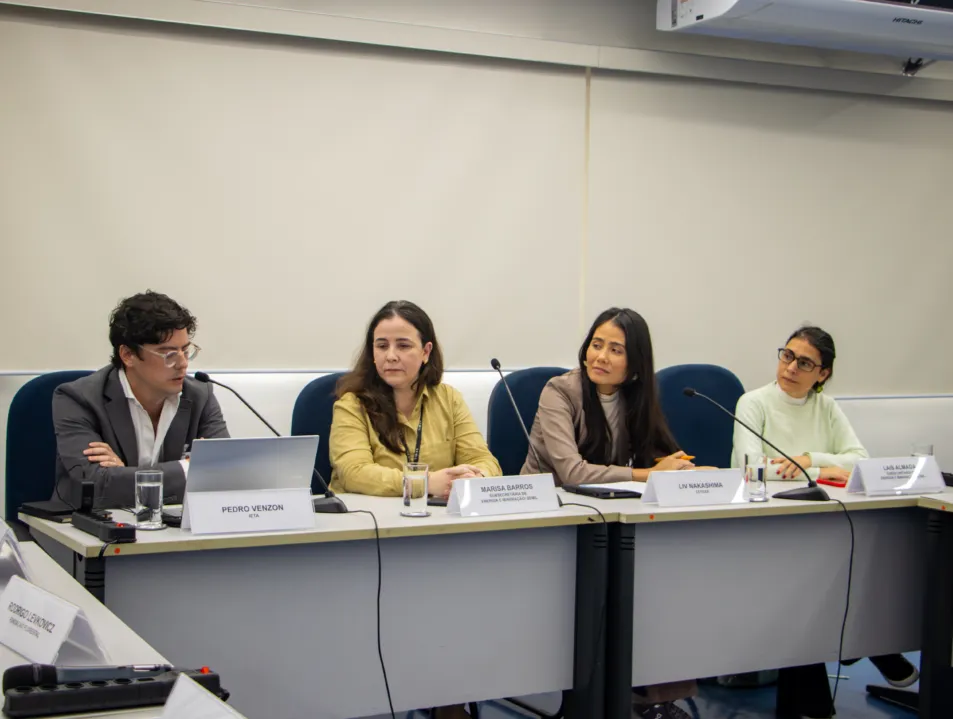
On 3 March, São Paulo hosted a workshop “Efficient Carbon Markets: Pathways for the Public Sector”, held at the headquarters of the Environmental Company of the State of São Paulo (CETESB). The event was organised by IETA, in partnership with the São Paulo State Secretariat for Environment, Infrastructure and Logistics (SEMIL), with the aim of supporting the state’s preparation for the implementation of the Brazilian Emissions Trading System (SBCE).
The workshop brought together representatives from several state government departments, agencies and public institutions, as well as national institutions such as the National Agency of Petroleum, Natural Gas and Biofuels (ANP) and the Energy Research Office (EPE). Experts from the private sector, academia and international organisations also joined the discussion.
Opening remarks were delivered by Pedro Venzon (IETA), Liv Nakashima (CETESB) and Marisa Barros (SEMIL), who highlighted the importance of strengthening institutional readiness as Brazil advances in the regulation of the SBCE. Speakers also emphasised the role of states in building the technical and governance capacity needed to support the implementation of carbon markets.
Throughout the day, participants discussed the fundamentals of carbon markets and the global landscape of carbon pricing. Today, more than 80 jurisdictions worldwide operate carbon pricing mechanisms, including emissions trading systems and carbon taxes, generating more than US$100 billion annually in public revenues.
The workshop also explored how different decarbonisation instruments currently operating in Brazil — such as CBIO, CGOB, CS-SAF, and the future CRVEs under the SBCE — may interact within the country’s emerging climate policy framework. Discussions highlighted the importance of regulatory coordination and clear governance structures to ensure environmental integrity and investment certainty.
Another key focus of the event was the role of strategic sectors in the State of São Paulo. Participants discussed opportunities for developing low-carbon projects in areas such as Sustainable Aviation Fuel (SAF), biogas and biomethane, and Carbon Capture and Storage (CCS). São Paulo’s industrial base, logistics infrastructure and concentration of demand were identified as factors that could position the state as a hub for several emerging low-carbon value chains.
The workshop also presented ongoing institutional initiatives in the state, including the São Paulo Climate Action Plan, restoration initiatives with potential carbon credit generation, and CETESB’s work in building greenhouse gas monitoring, reporting and verification (MRV) systems since 2012.
The event concluded with a brief discussion on climate finance, highlighting the role of financial instruments and international cooperation in enabling mitigation and restoration projects.
By bringing together policymakers, technical experts and market participants, the workshop contributed to advancing dialogue on the role of subnational governments in the development of Brazil’s carbon market architecture and the upcoming implementation of the SBCE.
Read the executive summary of the workshop here.