Oct 22, 2026
IETA calls on governments to offer “safe harbour” to companies using carbon credits
Companies retiring carbon credits want certainty that if they follow established rules and use approved high-quality credits and accurate claims, they will not suffer legal penalties or prosecution.
But while several jurisdictions have introduced guidelines for corporates on carbon markets and green claims, the specific application of so-called “safe harbour” mechanisms to carbon credit-based corporate claims is an emerging and largely undeveloped area of law.
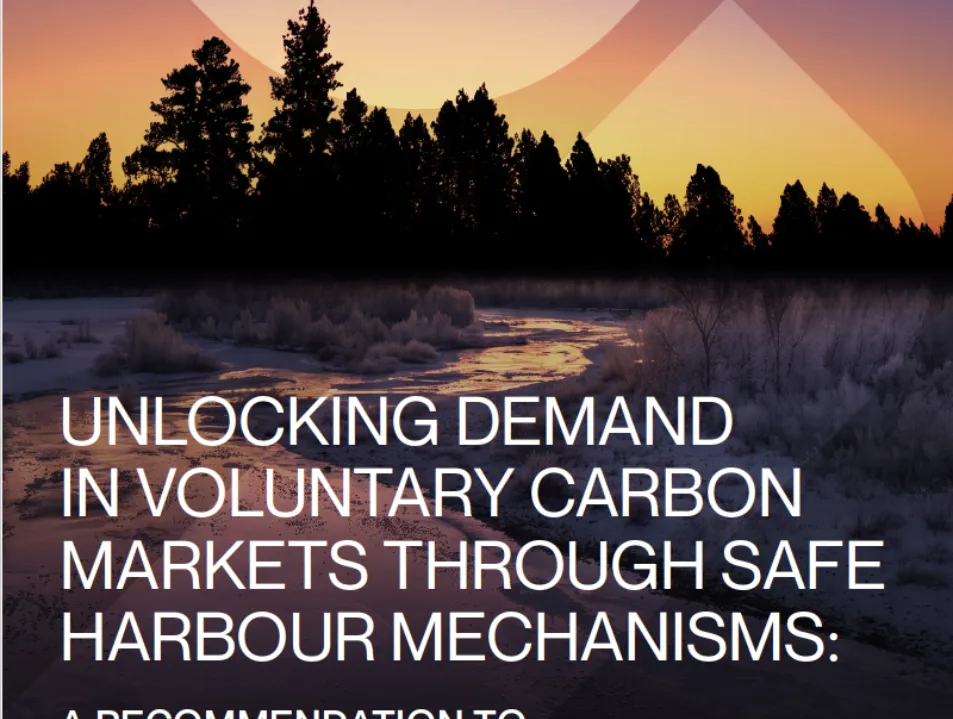
IETA has today published a paper presenting recommendations for governments on how to design safe harbour mechanisms including regulations, to reduce the litigation risk faced by those entities seeking to make claims in good faith about their use of carbon credits. The paper was commissioned by The Coalition to Grow Carbon Markets (the Coalition), a coalition of 14 member countries.
The paper sets out approaches for a defence – safe harbour – against legal allegations of “greenwashing” brought against corporates when using high integrity carbon credits alongside decarbonisation in their climate mitigation strategies.
To date, legal actions against the use of carbon credits have come under consumer protection and unfair competition statutes, or under common law, centered on allegations of false advertising, fraud, unjust enrichment, misrepresentation, and/or breach of warranties.
Extensive research was conducted in developing the paper, including analysis of existing carbon credit jurisdictional guidance and regulations, market consultation with corporates including IETA members and the Coalition’s Business Advisory Group, and consultation with some member governments of the Coalition.
These insights revealed the extent to which litigation risk suppresses demand for high-integrity credits and ultimately underpinned the recommendations for safe harbour provisions. To support carbon market growth and increase private investment into emissions reductions, IETA recommends that governments design safe harbour provisions to:
- Address both credit quality and the claim being made;
- Frame what claims may be made appropriately;
- Select relevant carbon credit standards to apply and eligible credit types to use;
- Clarify that either non-authorised or authorised credits may be used, except where a specific policy requires use of authorised credits;
- Set out permissible statements when making claims; and
- Decide whether to make “safe harbour” binding or non-binding. whether to make “safe harbour” binding or non-binding.
The paper concludes that “companies are seeking help from governments to better utilise carbon markets. They are seeking clarity and confidence to undertake and communicate legitimate climate action. Safe harbour mechanisms hold genuine promise as tools for reducing the legal uncertainty that currently constrains demand in voluntary carbon markets.”
Dirk Forrister, President & CEO, IETA, said: "Companies need to know that if they buy and retire high-quality carbon credits to mitigate their carbon footprint, they will be safeguarded against greenwashing allegations.
“If they follow best practice recommendations, use approved carbon credits and make accurate statements about use of credits, they should not be exposed to allegations of short-changing the climate. IETA’s Safe Harbour paper shows how governments can create an environment that encourages greater use of carbon credits, which in turn can unlock new sources of private investment.” –
“Confident, high-integrity corporate engagement in carbon credit markets is critical to getting private finance for climate action to move faster to where it is needed most. This paper is a useful contribution to the discussion on how safe harbour regulatory approaches could reduce legal and reputational risk, giving companies confidence to use high-integrity carbon credits as part of their climate transition efforts, while maintaining robust environmental standards. I thank IETA for its leadership on this issue, and for providing a valuable set of recommendations for consideration by the government members of The Coalition to Grow Carbon Markets." - Rachel Kyte, Special Representative for Climate, UK Government, and Co-Chair of The Coalition to Grow Carbon Markets.
Read the full report here.