Nov 20, 2026
IETA welcomes the agreement to link EU and UK Emissions Trading Systems
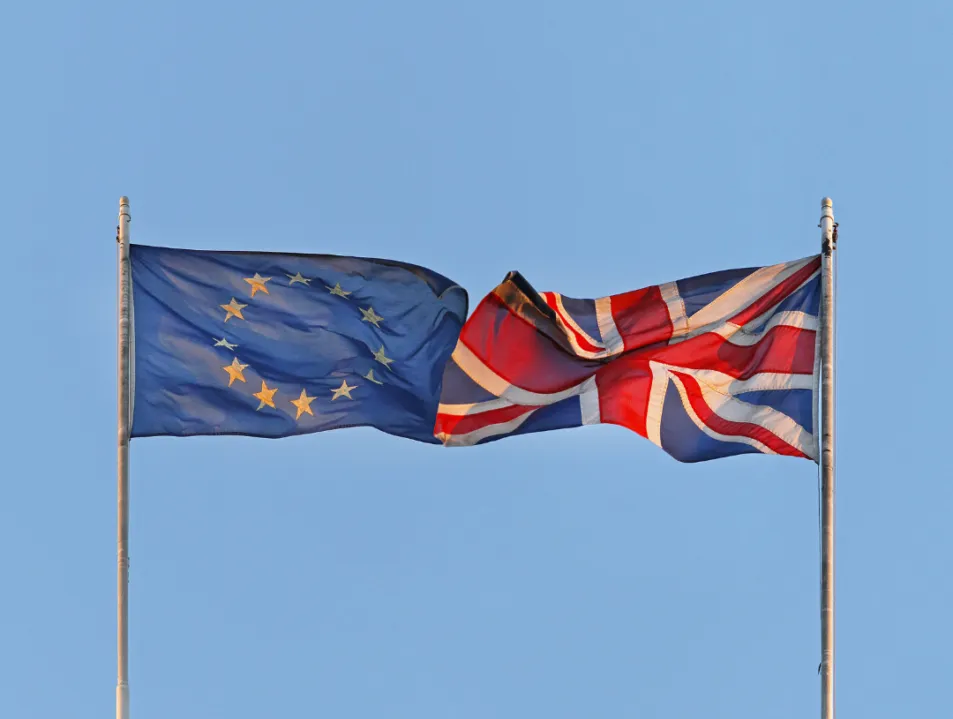
IETA warmly welcomes the agreement to link the EU and UK Emissions Trading Systems. Linking two of the world’s most closely aligned carbon markets will strengthen market efficiency while preserving the environmental integrity of both systems. It also reinforces the EU’s and the UK’s leadership in strong, market-based climate policy at a time when international cooperation on carbon pricing matters more than ever.
A common carbon price allows emissions to be cut wherever it is cheapest, lowering the overall cost of meeting climate objectives. Frontier Economics estimates that lower transaction costs alone will deliver €770m in shared benefits over the five years to 2030.[1]
Aurora D’Aprile, EU Policy Director at IETA, said: “By creating a larger, deeper market, linking improves liquidity, lowers transaction costs and enables more efficient risk management for regulated companies. Alongside the existing EU-Switzerland link, this agreement puts in place a multilateral European carbon market that can be extended to neighbouring trading partners as a route to CBAM disapplication.”
Alistair McGirr, Group Head of Policy and Advocacy for SSE, and Chair of IETA’s EU-UK Linking Taskforce, said: “The EU-UK ETS linking agreement is a welcome improvement to the EU-UK trading relationship, helping to strengthen our collective competitiveness. Alongside the benefits of a larger carbon market, removing Carbon Border Adjustment Mechanism requirements from EU-UK trade will reduce unnecessary costs and complexity for businesses, ultimately benefiting consumers.”
Opening trade opportunities
One of the most significant consequences of linking is the mutual exemption of goods traded between the EU and the UK from each other's Carbon Border Adjustment Mechanisms (CBAMs), removing an important source of trade friction, with UK exporters estimated by Frontier Economics to have faced potential charges up to £800 million by 2030. The UK CBAM will not apply to EEA/EU imports from January 2027, with the EU following later in 2028.
Sarah Hay, Climate Policy Lead at Norsk Hydro, said: “The disapplication of the UK CBAM to EU/EEA goods is welcome. As the UK CBAM is due to start in less than 2 months, businesses were facing uncertainty over import costs, with a lack of clarity on whether these obligations apply to trade between the EU/EEA and the UK. The equivalent exemption for UK goods under the EU CBAM should follow as soon as possible."
Getting the design right
IETA advocates for stable and predictable carbon price signals that give companies confidence to invest long term in industrial decarbonization and clean technologies. While each jurisdiction should keep appropriate policy flexibility, continued alignment on core market design is essential to preserve market integrity and make the link durable. Alignment beyond core market design should be shaped by a fair goods trading relationship, not treated as something the carbon market needs in order to function.
Aurora D’Aprile, added: “IETA remains committed to supporting the successful implementation of the link and would welcome continued engagement as implementation discussions progress. In particular, IETA members will be interested to see how the design of the EU and UK CBAMs will develop, with improvements to be had from closer alignment”
A model for wider cooperation
A successful EU-UK link would provide an important model for linking other high-integrity emissions trading systems. It would also support the gradual development of international carbon pricing clubs.
Dirk Forrister, President and CEO at IETA, said: “No single market can deliver net zero alone. Linking the EU and UK carbon markets deepens liquidity, strengthens the price signal and shows what cooperation can achieve – a blueprint for greater ambition worldwide. Linkages like this are vital and prove that markets work, and carbon markets matter.”
[1] Frontier Economics (2025) – The shared benefits of linking EU and UK carbon markets